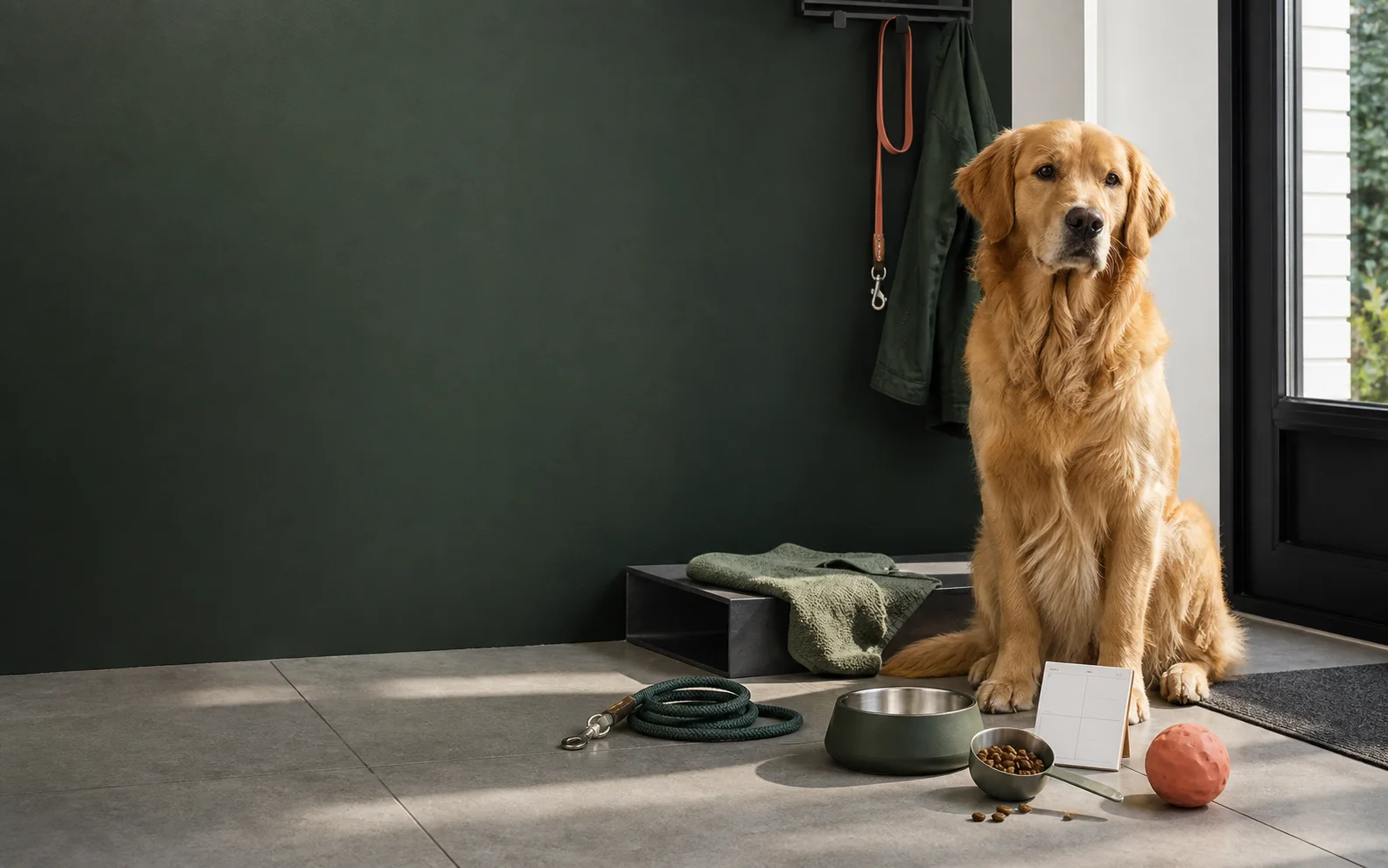
How to use this daily dog schedule
Start with the example, then enter your household’s real meal and toilet times. Keep activity appropriate to the dog and put a person’s name beside each care task. The generator spaces example reminders across your day; it does not set exercise duration or how long a dog can wait between toilet breaks.
A dog schedule around your working hours
If you will be away, arrange someone who can cover the dog’s needs and name them in the carer column. Agree on the visit length and tasks, then prepare dog walker instructions. Use the pet sitter rates calculator to compare written quotes for those visits.
Make a different routine for a puppy or senior dog
Use the free puppy schedule generator for a starting plan with frequent toilet-signal reminders. For an older dog, adapt the senior pet routine to their mobility and prescribed care. Neither template replaces individual veterinary guidance.
A practical adult-dog rhythm
- Morning: toilet break, fresh water, measured meal, and appropriate movement.
- Midday: toilet opportunity, short interaction or enrichment, and rest.
- Evening: meal, walk or play, a brief training moment, and calm household time.
- Before bed: final toilet break, water check, and a quick physical and behavior check.
Puppies, seniors, working dogs, and dogs with medical conditions need different timing and frequency. Use this as a household framework, then follow veterinary and behavior guidance for the individual dog.
Meals and water
Measure meals consistently and agree on who gives treats so several carers do not unknowingly repeat them. Keep fresh water available unless a veterinarian has given a specific instruction. Sudden changes in appetite or drinking are worth recording.
Movement and enrichment
Match activity to age, fitness, weather, mobility, and health. Movement can include sniffing walks, play, training, food puzzles, and calm exploration. More intensity is not automatically better; a dog should recover comfortably.
Rest belongs in the schedule
Dogs need uninterrupted downtime. Keep one comfortable resting place where children, visitors, and other animals do not repeatedly disturb them. A dog who cannot settle may need a quieter environment, a simpler routine, or professional advice.
The evening check
Take one minute to notice appetite, water, urination, stool, energy, breathing, movement, skin, paws, and anything unusual. The goal is not a full examination. It is a consistent baseline that makes change easier to describe.
Make household ownership explicit
Assign each task instead of assuming somebody will notice it: morning meal, midday break, evening walk, medication, and final door check. For a sitter, write the sequence down and include emergency contacts.
Contact a veterinarian for persistent appetite or stool changes, pain, sudden behavior change, or other health concerns. Breathing distress, collapse, major trauma, severe bleeding, or obvious severe pain is urgent.
Source notes
The schedule is a household organization example. Individual exercise, feeding, preventive care, and health needs should come from the dog's veterinarian and the instructions for the dog's current food and medication.
Keep the routine useful between visits
Use Share schedule for a read-only copy another carer can open. Anyone with the link can read its contents; it is a snapshot, so send a new link after important changes. Opening a shared copy does not replace a schedule already saved on that device.
Add to calendar lets you choose tasks and export 1, 7, 14 or 28 daily routines. Import the file into a calendar you control and check its local times and alert settings. Exports do not sync, and importing twice may create duplicates. More options includes a portable backup you can reopen on another device.
Frequently asked questions
What should a daily dog schedule include?
Include meals, fresh water, toilet opportunities, suitable movement, enrichment, rest, brief training, and a simple evening health check.
Does every dog need the same schedule?
No. Age, health, temperament, household routine, weather, and veterinary advice all affect timing and activity.
How exact do the times need to be?
Use a repeatable sequence and mark the few times that truly cannot move, such as prescribed medication or a scheduled caregiver visit.