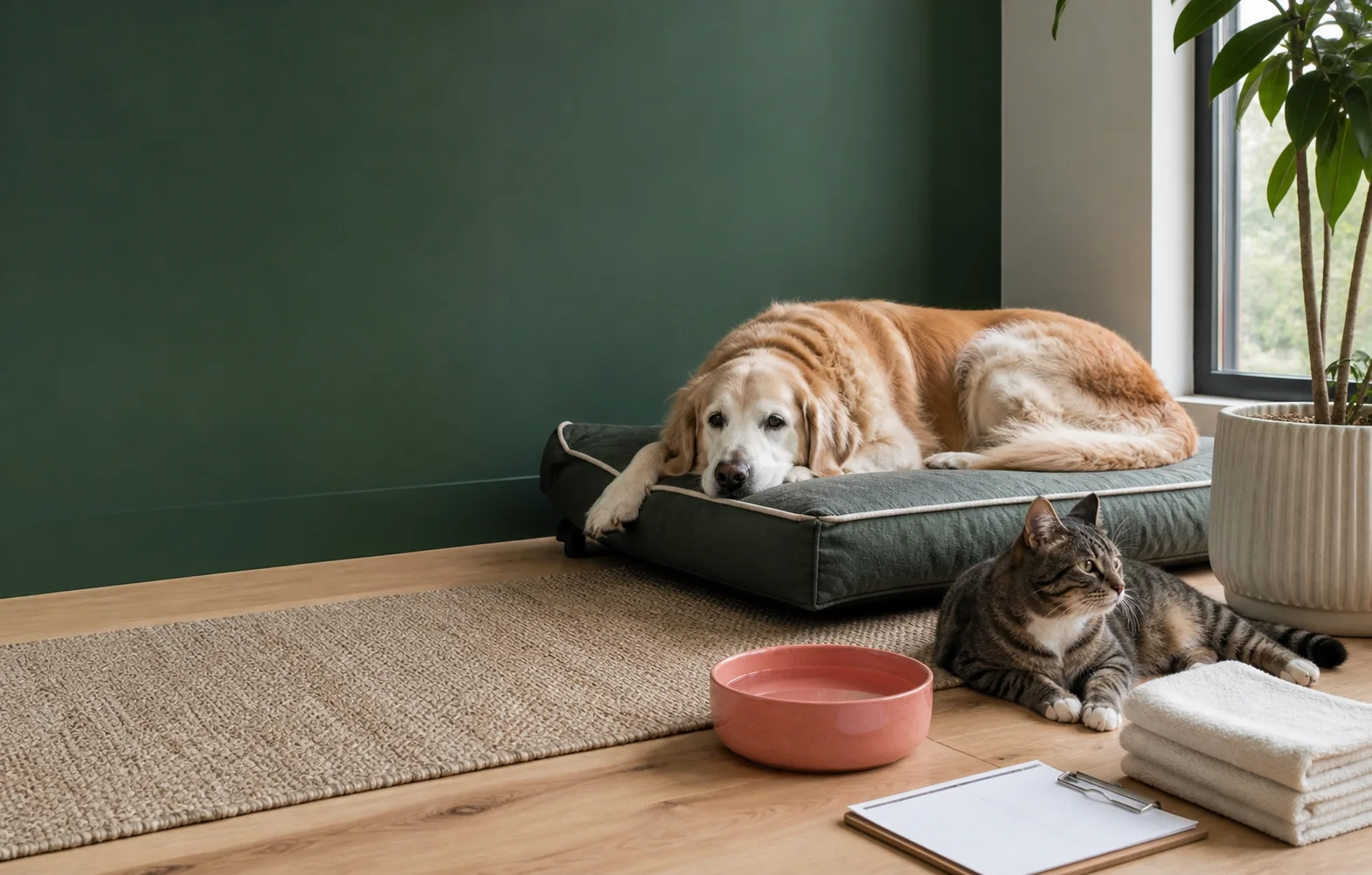
Make essential places easy to reach
Look at the route to food, water, beds, litter trays, toilet areas, and favorite resting places. Slippery floors, high-sided trays, stairs, and long distances can turn ordinary needs into difficult work. Add traction, lower entry points, supportive bedding, or another water station where appropriate.
Use a predictable daily sequence
A steady order can make appetite, mobility, toileting, and medication changes easier to spot. Keep the sequence consistent even when exact times move slightly.
- Morning: observe how the pet rises, walks, eats, drinks, and toilets.
- Midday: provide a short comfortable activity, fresh water, and a quiet rest period.
- Evening: repeat meals and medication as prescribed, then note appetite and comfort.
- Bedtime: offer a final toilet opportunity and make the sleeping area easy to access.
Keep medication records literal
Record the medication name, prescribed dose, time given, and any instruction about food. Use a checklist that every carer can see. Never double a missed dose unless the prescribing veterinarian has given that instruction.
Choose comfortable movement
Short, regular movement may be easier than occasional long sessions, but the right activity depends on the individual pet and medical history. Stop for pain, weakness, breathing distress, unusual fatigue, or reluctance. Ask a veterinarian about a meaningful exercise plan when mobility changes.
Track changes without calling them normal aging
Write down new stiffness, pacing, confusion, accidents, hiding, sleep disruption, appetite change, weight change, altered social behavior, or difficulty settling. A dated example is more useful during a veterinary conversation than a general memory that the pet has "slowed down."
Sudden weakness, collapse, breathing difficulty, severe pain, repeated vomiting, inability to urinate, or rapid deterioration needs prompt veterinary help.
Give another carer the same view
A sitter or family member should know the normal routine, medication record, mobility limits, veterinary contacts, and changes that require a call. Keep that handoff short enough to scan and specific enough to follow.
Source notes
The comfort and observation sections draw on AAHA resources for assessing senior-pet quality of life and senior veterinary care.
Frequently asked questions
What belongs in a senior pet's daily routine?
Keep food, water, toilet access, prescribed medication, comfortable movement, rest, and one brief observation check in a predictable order.
Which changes should I record?
Record meaningful changes in appetite, drinking, toileting, breathing, sleep, mobility, interaction, and apparent comfort, then share them with the veterinarian.
Should I change medication when the routine changes?
No. Record what happened and contact the prescribing clinic. Dose and timing changes need veterinary direction.