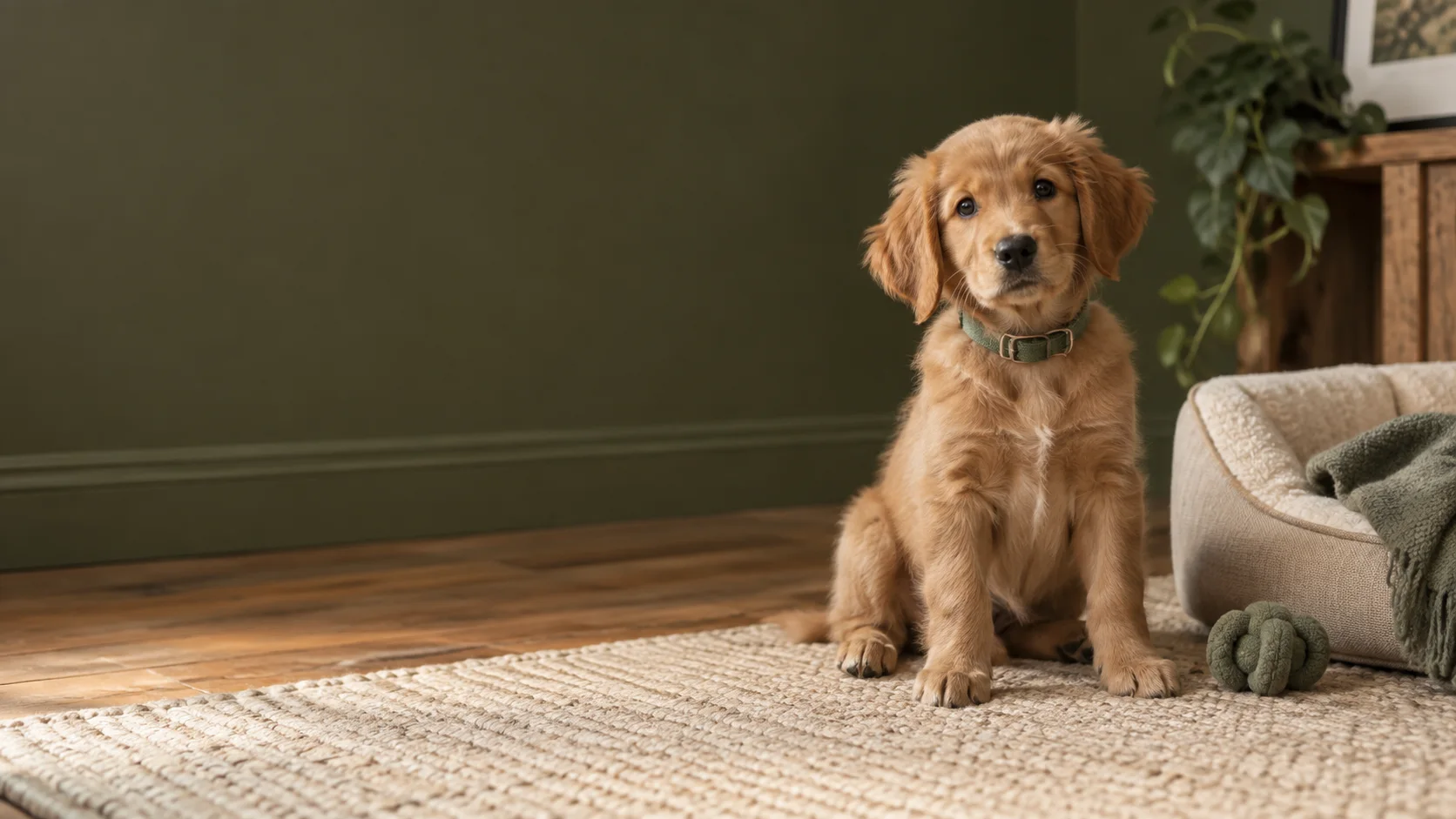
Before they arrive: a puppy checklist
Ask the breeder, shelter or previous carer for the puppy’s current feeding instructions, daily pattern and available records. Put these in one place your household can find. Arrange veterinary follow-up and ask about individual care needs.
- Care records: collect the current feeding instructions, food name, measuring method and available veterinary records.
- Food and water: have the current food, bowls and measuring supplies ready in an agreed place.
- Rest and boundaries: prepare a resting space and check the rooms, gates and doors the puppy will use.
- Travel and clean-up: arrange suitable transport, a lead or carrier as appropriate, waste bags and cleaning supplies.
- People: confirm who will be present on arrival day, during work hours and overnight.
- Contacts: save your veterinary practice and local emergency clinic details where carers can find them.
Write a person’s name beside anything still to do. You can keep records and contacts in the pet care binder, or use a folder at home.
The first day: agree who does what
Agree who will handle the morning, afternoon and overnight jobs. Check with each person before adding their name to the schedule.
Keep the puppy’s feeding and care instructions with the schedule so whoever takes over can find them.
The first week: write down what actually happens
Jot down what happened alongside the plan:
- Planned time: when you expected to do the task.
- Actual time: when it happened.
- Who helped: the person who completed it.
- Change for tomorrow: something to do differently or a question to ask.
For example: “Jamie gave breakfast at 7:30. Alex is doing it tomorrow; the food and scoop are in the kitchen cupboard.” Keep the current version somewhere everyone helping can find it.
A daily note you can copy
- Date and carer: ____
- Meals and care completed, with actual times: ____
- Sleep, toilet trips and observations to pass on: ____
- Next person and handover time: ____
- Question or change for tomorrow: ____
The routine is the plan; this note is the record of what happened. A shared routine does not have a live completion log. Keep completed-care notes in the channel your household has agreed to use.
Weeks two to four: update the plan
Check what still works as your puppy settles in. Update the jobs, remove duplicate reminders and confirm who can help if your working hours change. There’s no deadline for your puppy to settle in or finish training.
- After week one: compare the example times with the care you actually provided. Adjust entries that did not fit.
- During weeks two and three: check your next workweek, appointments and helpers’ availability. Confirm cover before removing anyone from the plan.
- At the end of the month: review the current care instructions and contacts, keep any records you need, and replace outdated copies.
These are reminders to review your household arrangements, not puppy development deadlines.
Open your saved routine, choose Edit routine, change the times or notes, then choose Done editing and Save on device. If you have shared an older version, create and send a fresh link. Shared routines are snapshots and do not update automatically.
Keep these details with the schedule
- The current care instructions and where the supplies are kept.
- Who can help when the usual person is unavailable.
- Your veterinary contact and the questions you want to ask.
If you need someone to help while you’re at work, use the working-hours planning guide to work out who can cover the hours you’re away.
Source notes
Home preparation and agreeing household responsibilities are informed by the American Kennel Club’s Preparing for a New Puppy. The checklist, weekly checkpoints, note headings and app instructions are XYZ Pets’ organizational suggestions, not a veterinary or training programme. No veterinary review is claimed.
Common questions
Do I need a separate plan for every day?
Start with a routine for a typical day. Adjust it when your household’s availability or the puppy’s care instructions change. Keep a printed or downloaded copy before replacing a version you need.
Will the routine tell me when my puppy should reach milestones?
No. It organizes household tasks. Your puppy’s individual progress and needs cannot be determined by a generic monthly timetable.
Can more than one person use the plan?
Yes. Add carers to the entries and share or print the routine. The shared link is a snapshot, so agree how you will communicate changes and completed tasks.