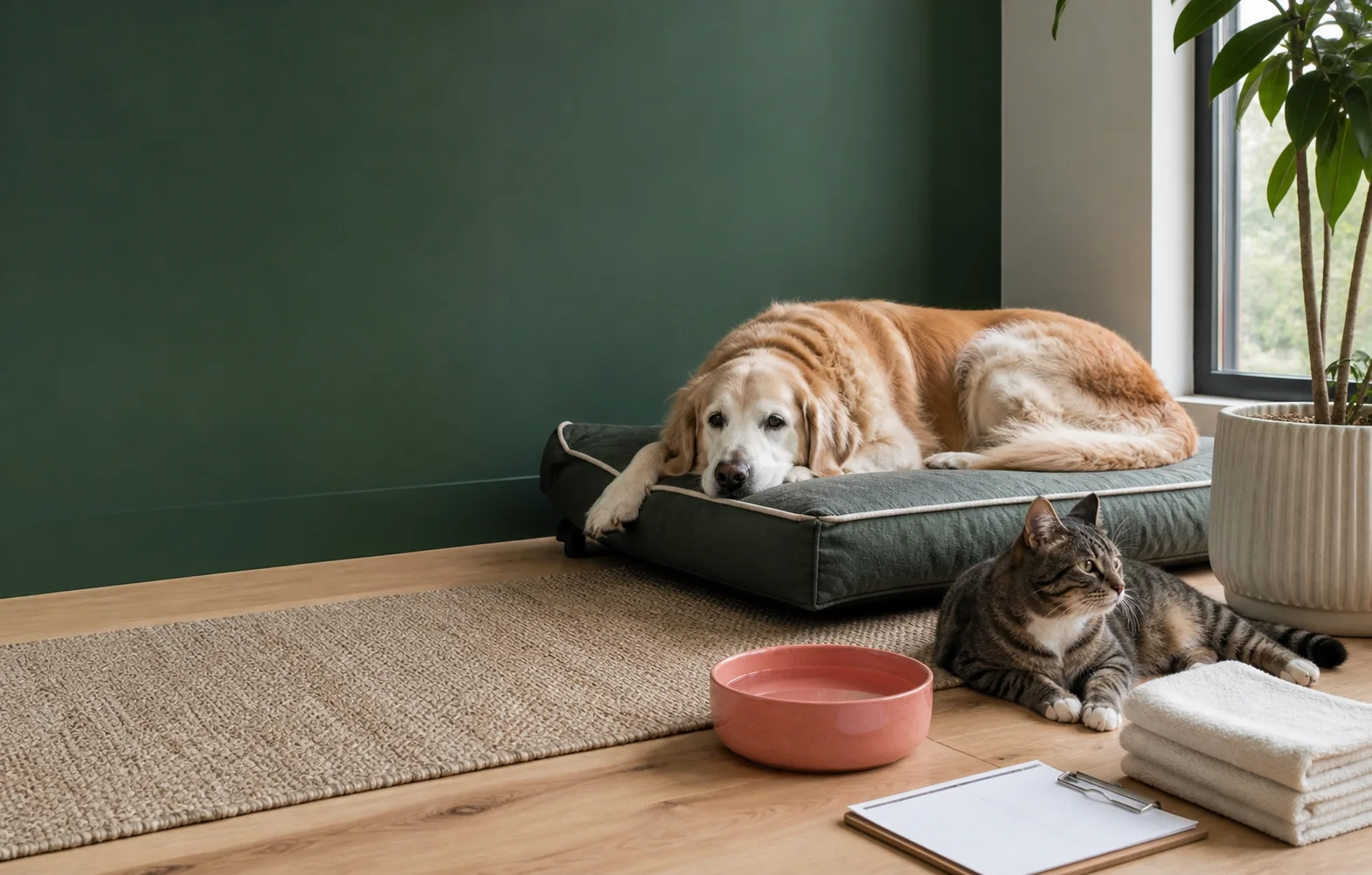
Give every pet a separate profile
Start each profile with a current photo, name, species, age or life stage, identifying features, microchip reference, usual clinic, carrier or lead location, and the people authorized to make decisions. Use the name again in every care block.
Describe ordinary behavior in observable terms. “Hides under the bed during visits” is more useful than “shy,” and “must be separated before food is placed down” is more useful than “food reactive.”
Keep shared home instructions together
Create one household section for access, keys, alarms, doors, gates, bins, cleaning supplies, Wi-Fi, update expectations, departure steps, and emergency equipment. Avoid repeating access codes on every pet profile.
Share only what the recipient needs. Keep passwords, payment card details, and unrelated account credentials outside the binder.
Separate meals and medication by name
List each pet’s food, measurable amount, time, bowl, location, leftovers, prohibited foods, and separation routine. Medication should use the current label or clinic wording for name, prescribed amount, route, time, storage, and clinic contact.
Do not use color alone to distinguish bowls, containers, or schedules. Add the pet’s written name and, where useful, a photo.
Make identification and emergencies usable
Include the regular veterinarian, appropriate after-hours clinic, owner, backup decision-maker, insurance reference if applicable, known conditions, allergies, current medication, and transport equipment. Verify every number before the handoff.
State what the caregiver should do first and who they should call. The binder should carry known facts and authorization, not diagnose symptoms.
Use one current version
Date the binder and replace every shared copy after a food change, new prescription, moved supply, changed phone number, new clinic, new pet, or new household risk. Ask the recipient to delete an old link or recycle an old printout.
Review the document together before the care period. A binder is a reference after the walkthrough, not a substitute for demonstrating equipment, access, separation, or handling.
Source notes
AAHA recommends detailed routine instructions and, for multi-pet households, clear identification so a sitter does not confuse pets. Its guidance also calls for regular and emergency clinic contacts and a nearby backup person. Read AAHA’s essential pet sitter instructions.
Frequently asked questions
What belongs in a multi-pet care binder?
Give each pet a separate profile for identity, food, medication, behavior, routine, and transport, then add one shared home and contact section.
How often should I update the binder?
Review it before every handoff and whenever a contact, medication, food, clinic, access detail, or daily routine changes.
Should private access codes stay in the binder?
Include only what the current caregiver needs. Remove temporary codes after the handoff and avoid storing financial passwords.