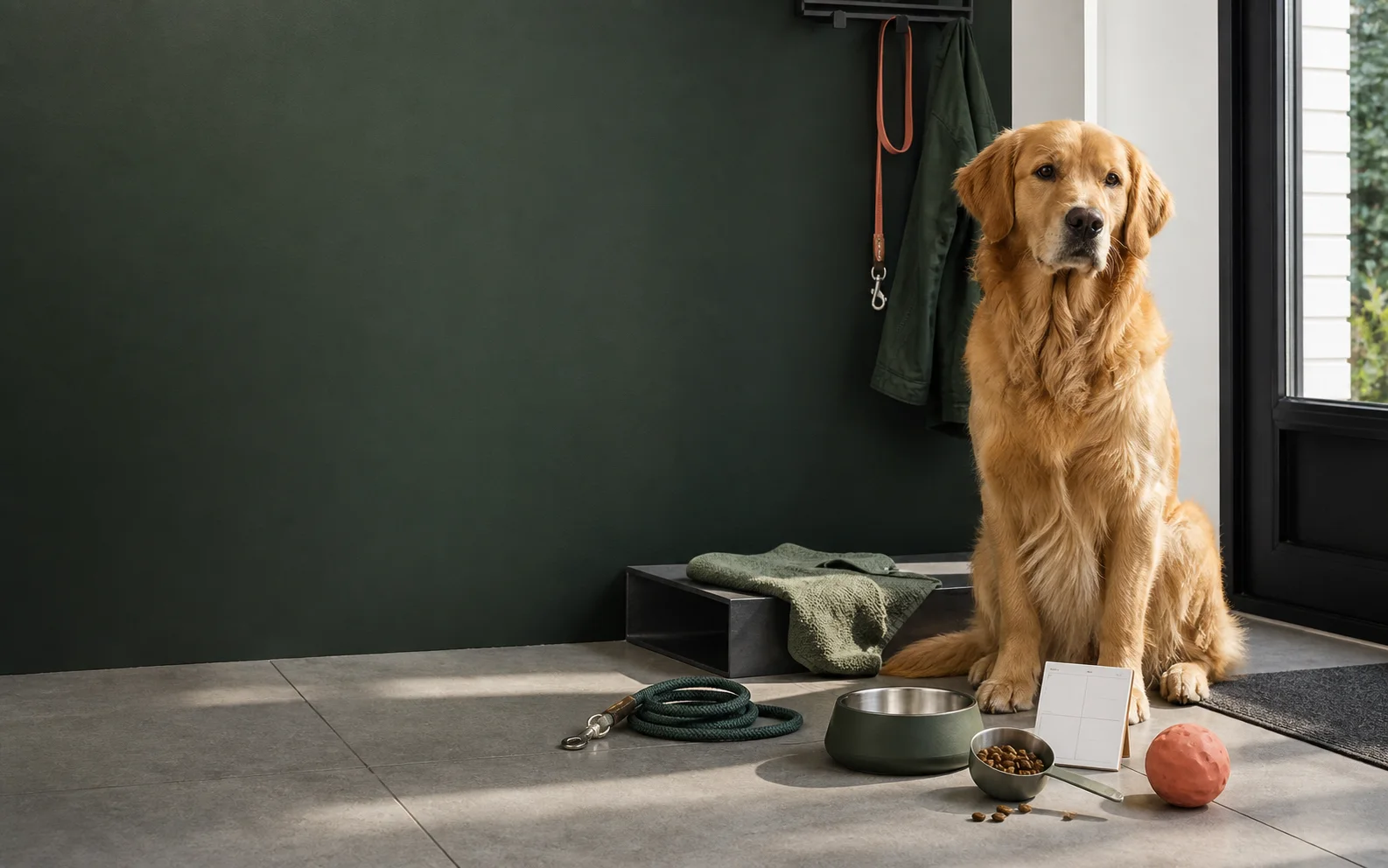
A practical adult-dog rhythm
- Morning: toilet break, fresh water, measured meal, and appropriate movement.
- Midday: toilet opportunity, short interaction or enrichment, and rest.
- Evening: meal, walk or play, a brief training moment, and calm household time.
- Before bed: final toilet break, water check, and a quick physical and behavior check.
Puppies, seniors, working dogs, and dogs with medical conditions need different timing and frequency. Use this as a household framework, then follow veterinary and behavior guidance for the individual dog.
Meals and water
Measure meals consistently and agree on who gives treats so several carers do not unknowingly repeat them. Keep fresh water available unless a veterinarian has given a specific instruction. Sudden changes in appetite or drinking are worth recording.
Movement and enrichment
Match activity to age, fitness, weather, mobility, and health. Movement can include sniffing walks, play, training, food puzzles, and calm exploration. More intensity is not automatically better; a dog should recover comfortably.
Rest belongs in the schedule
Dogs need uninterrupted downtime. Keep one comfortable resting place where children, visitors, and other animals do not repeatedly disturb them. A dog who cannot settle may need a quieter environment, a simpler routine, or professional advice.
The evening check
Take one minute to notice appetite, water, urination, stool, energy, breathing, movement, skin, paws, and anything unusual. The goal is not a full examination. It is a consistent baseline that makes change easier to describe.
Make household ownership explicit
Assign each task instead of assuming somebody will notice it: morning meal, midday break, evening walk, medication, and final door check. For a sitter, write the sequence down and include emergency contacts.
Contact a veterinarian for persistent appetite or stool changes, pain, sudden behavior change, or other health concerns. Breathing distress, collapse, major trauma, severe bleeding, or obvious severe pain is urgent.
Source notes
The schedule is a household organization example. Individual exercise, feeding, preventive care, and health needs should come from the dog's veterinarian and the instructions for the dog's current food and medication.
Frequently asked questions
What should a daily dog schedule include?
Include meals, fresh water, toilet opportunities, suitable movement, enrichment, rest, brief training, and a simple evening health check.
Does every dog need the same schedule?
No. Age, health, temperament, household routine, weather, and veterinary advice all affect timing and activity.
How exact do the times need to be?
Use a repeatable sequence and mark the few times that truly cannot move, such as prescribed medication or a scheduled caregiver visit.