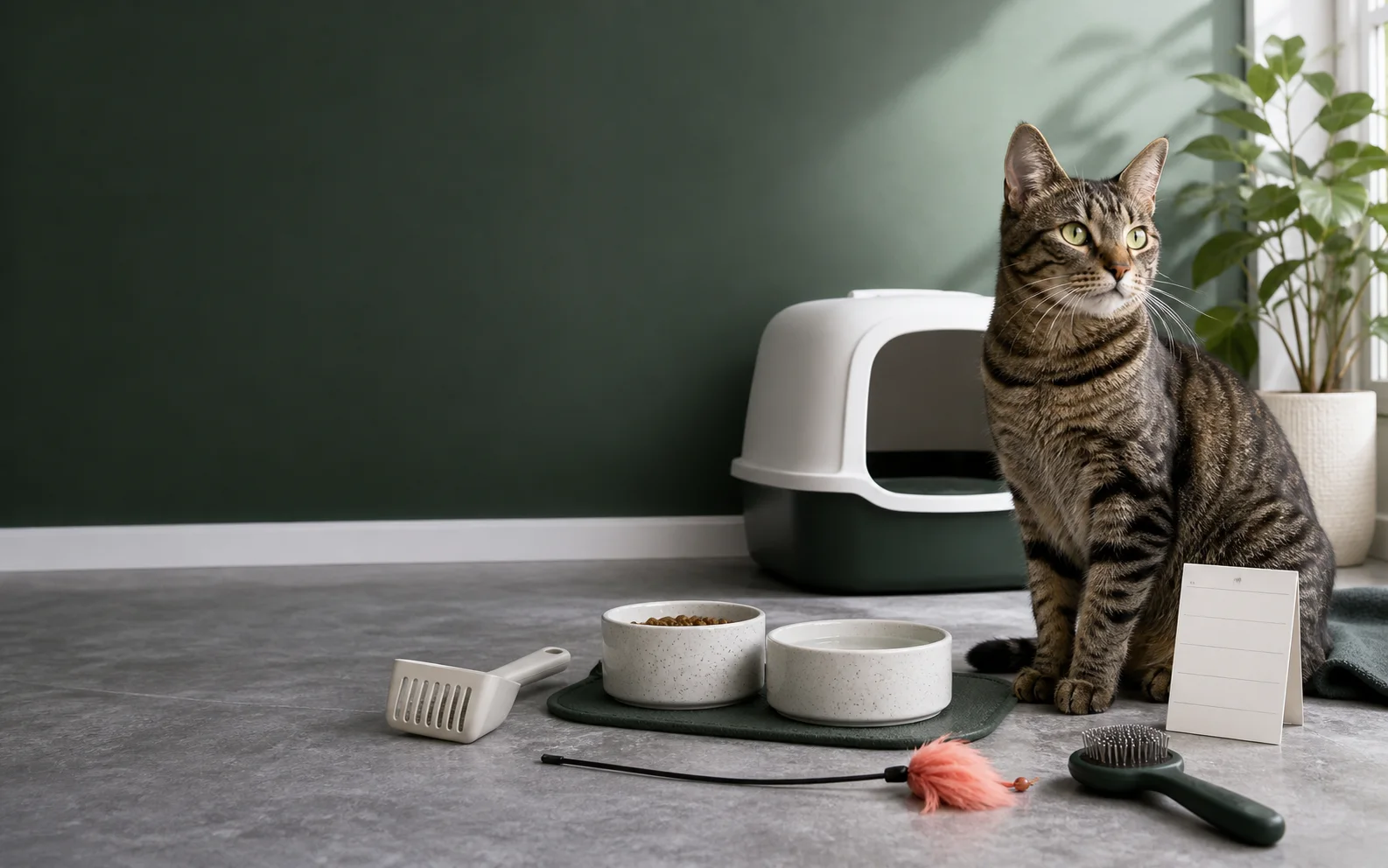
How to use this cat daily routine
Use the example as an adult-cat household checklist, then replace meal times and portions with your cat’s actual feeding plan. Assign each task to a person, especially in multi-cat homes where feeding can be duplicated. The generator spaces reminders across your chosen day; those times are not a veterinary recommendation.
A cat schedule when you work away from home
Plan who will check food, water and litter while you are out. Timed feeders and toys do not replace a person checking how the cat is doing. Record what the carer should observe and use cat sitter instructions for hiding places, entry rules and emergency contacts.
Kittens and senior cats need different plans
This adult-cat example cannot set a kitten’s feeding frequency or a senior cat’s medical routine. Add the meals and prescribed care agreed with your veterinarian, make resources easy to reach, and keep notes about changes. Use a separate medication record for written directions.
A practical adult-cat rhythm
- Morning: fresh water, measured meal, litter check, and short interactive play.
- Midday: quiet rest, environmental enrichment, and a quick water or litter check.
- Evening: meal, active play, grooming if welcomed, and calm social time.
- Before bed: scoop litter, refresh water if needed, and note appetite, movement, and behavior.
Kittens, senior cats, multi-cat households, and cats with medical conditions need individualized routines. Follow veterinary guidance for feeding, medication, and monitoring.
Make food intake observable
Measure what is offered and notice what remains, especially when several people feed the cat. In multi-cat homes, separate feeding may be needed to know who ate. A cat who stops eating can become unwell quickly, so contact a veterinarian rather than waiting several days.
Place water where the cat will use it
Provide clean water in accessible, calm locations. Some cats prefer water away from food or litter. Wash bowls or fountains regularly and record a clear increase or decrease in drinking.
Treat litter as useful daily information
Scoop at least daily so urine and stool changes are visible. Keep trays clean, accessible, and in quiet locations. Inability to urinate, repeated straining, or frequent unproductive tray visits is urgent, especially in male cats.
Use short play that resembles hunting
Several short sessions may suit a cat better than one long session. Let the cat stalk, chase, and catch a safe toy, then finish calmly. Provide scratching surfaces, hiding options, height, and undisturbed sleep.
Notice withdrawal and movement changes
Cats may show illness through hiding, reduced jumping, altered grooming, irritability, sleep changes, or avoiding social contact. Write down the date and a specific example. That is more useful than saying the cat "seems off."
Breathing difficulty, collapse, major trauma, severe pain, repeated vomiting, suspected poisoning, or inability to urinate needs prompt veterinary help.
Source notes
The routine reflects AAHA/AAFP guidance on feline life-stage care and environmental needs.
Keep the routine useful between visits
Use Share schedule for a read-only copy another carer can open. Anyone with the link can read its contents; it is a snapshot, so send a new link after important changes. Opening a shared copy does not replace a schedule already saved on that device.
Add to calendar lets you choose tasks and export 1, 7, 14 or 28 daily routines. Import the file into a calendar you control and check its local times and alert settings. Exports do not sync, and importing twice may create duplicates. More options includes a portable backup you can reopen on another device.
Frequently asked questions
What should a daily cat schedule include?
Include measured meals, fresh water, litter checks, short play, rest, grooming when needed, and observation of the cat's normal behavior.
Why record litter and food every day?
Changes in eating, drinking, urination, or stool can be useful information when deciding whether to contact a veterinarian.
How much play should I schedule?
Use short sessions that suit the cat's age, health, and interest. Stop if the cat disengages or appears uncomfortable.