Make access predictable
Explain where the walker enters, how the alarm or building access works, which internal door keeps the dog secure, and what must be locked again. Keep sensitive codes out of a link that may be retained. Test the key and entry sequence together before the first solo visit.
Describe the dog’s usual location when the walker arrives and what to do if the dog hides, barks, or does not approach normally.
Name the exact equipment
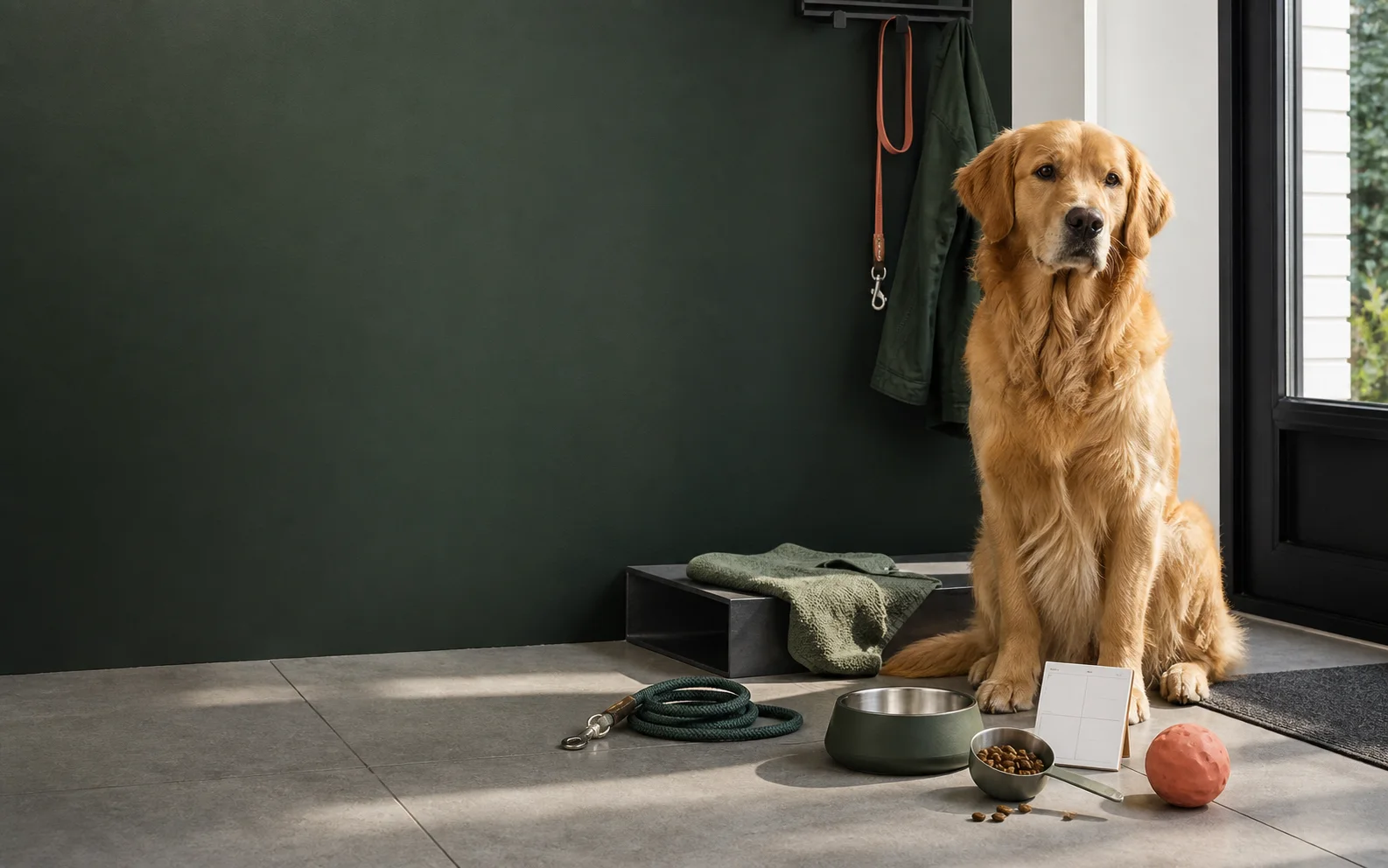
Identify the collar, harness, lead, waste bags, coat, light, towel, and any approved treat pouch by location and appearance. Demonstrate how the harness closes and where the lead attaches. If a second safety clip is part of the routine, write it down.
Record equipment the walker must not use. A familiar-looking retractable lead or spare collar is not automatically appropriate for the dog.
Describe the route as boundaries
Give a usual route, approximate duration, toilet areas, water plan, and streets or parks to avoid. Mark gates, off-lead areas, traffic crossings, livestock, school exits, or other predictable pressure points. State clearly whether the dog is ever allowed off lead.
Practical format: “Turn left at the gate. Use the quiet block. Cross only at Pine Street. Do not enter the dog park.”
Pair each trigger with the response
A warning alone is incomplete. Record what the dog reacts to, the distance that usually works, the cue the owner uses, and the safe exit. Include bicycles, runners, other dogs, children, food on the ground, loud vehicles, and handling sensitivities only when they are relevant.
Do not ask a walker to test a new training method. The brief should preserve the routine the owner and qualified trainer already use.
Define weather, incident, and return rules
Agree when a walk becomes a shorter toilet break because of heat, cold, storms, poor air, injury, or unusual behavior. Put the owner, backup contact, regular veterinarian, and emergency clinic in the brief. Explain how to report a loose dog, equipment failure, bite, fall, vomiting, refusal to walk, or inability to urinate without trying to diagnose it.
Finish with the return sequence: water, food or medication if applicable, paws and coat, doors, alarm, key, and the expected update.
Source notes
The American Kennel Club’s loose-lead guidance emphasizes consistent handling rather than allowing pulling to move the walk forward. Use the owner’s established method and read the AKC’s walking guidance for general context.
Frequently asked questions
What should dog walker instructions include?
Include access, equipment, route boundaries, handling cues, triggers, weather limits, toilet cleanup, incident contacts, and the return-home routine.
Should I include an emergency contact?
Yes. Give the walker the owner's number, a backup contact, and the regular or emergency clinic details relevant to the walk.
Can the instructions be printed?
Yes. Complete the free walker tool online or use its Blank Template option for a printable empty copy.