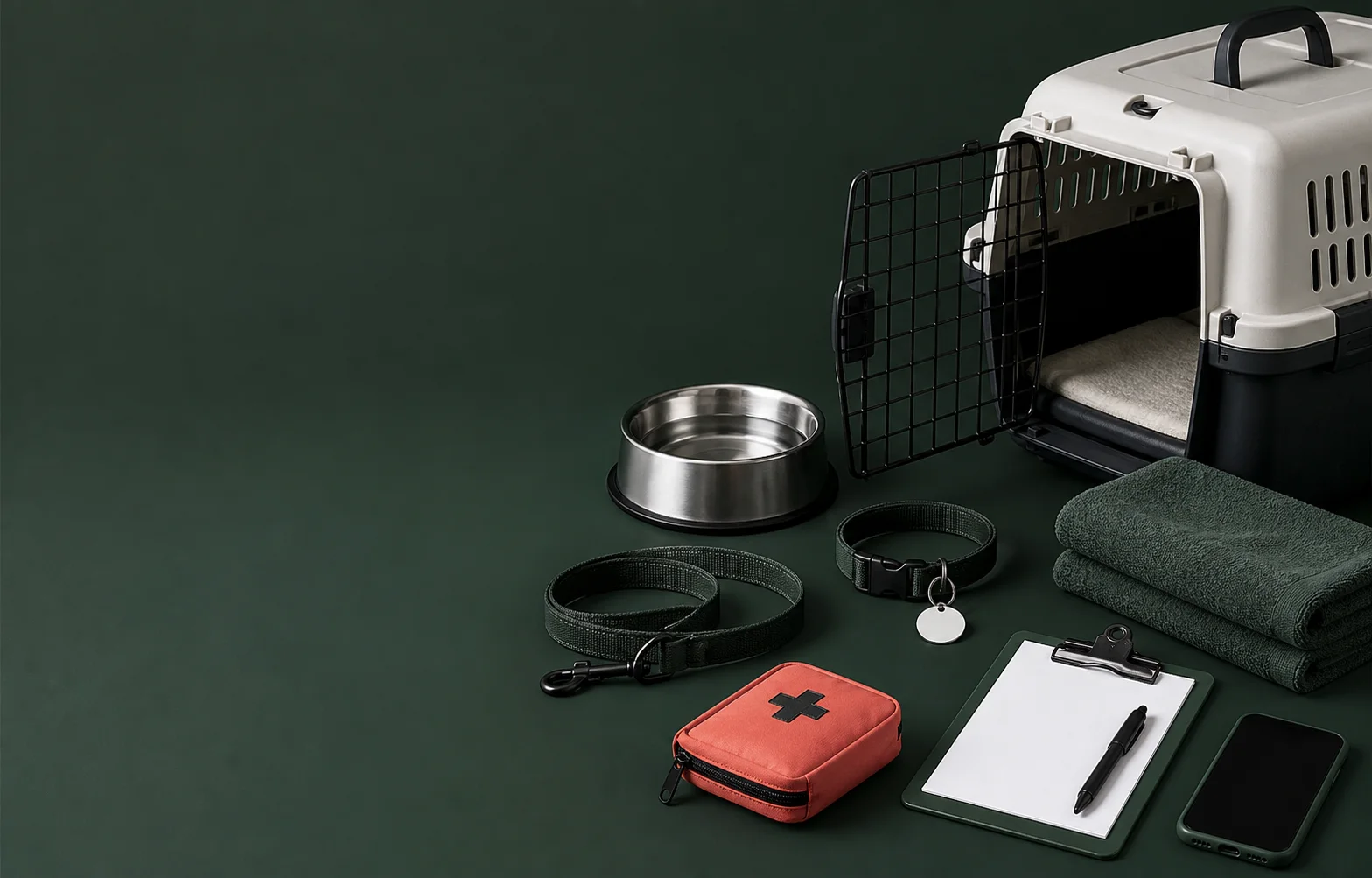
Start with the facility, not the packing list
Ask for the current check-in requirements before buying containers or packing comfort items. Confirm vaccination or health-record deadlines, medication packaging, food labeling, accepted bedding and toys, arrival and pickup windows, cancellation terms, and who may collect the pet.
Also ask how the facility handles pets that do not eat, need quiet separation, cannot join group play, or require mobility support. The checklist should reflect the booked service rather than a generic kennel stay.
Put identity and contacts at the top
Check the collar tag and microchip registration before the stay. Give the facility the owner’s reachable contact details, one local backup contact, the regular veterinarian, and the nearest appropriate emergency clinic. State who may authorize treatment if the owner cannot be reached.
Include a current photograph and describe any escape behavior or handling boundary in plain language.
Label food by pet, meal, and amount
Use the container format the facility requests. Label each pet’s food with the name, meal or date, and exact amount. Add preparation instructions, separation rules, allergies, and the measuring tool if it matters. Pack enough for the booked stay plus a reasonable delay reserve.
Check first: Some facilities prohibit loose bags, opened cans, bedding, or unapproved treats. Their current policy decides what belongs in the bag.
Keep medication in the approved form
Provide the original labeled container unless the facility and prescribing clinic approve another format. Attach the medication schedule with the prescribed amount, route, time, storage direction, and clinic number. Confirm whether staff can administer the medication and whether an additional form or fee applies.
Close the arrival and pickup loop
Record the drop-off appointment, expected collection time, late-flight plan, authorized collector, payment status, and the update channel. At check-in, walk through the care notes instead of assuming the uploaded form reached the person handling the pet.
At collection, ask about appetite, medication, toileting, sleep, activity, and anything outside the ordinary pattern. Return keys, documents, unused medication, and remaining food to the same owner or authorized person.
Source notes
AAHA recommends checking the facility in person, confirming vaccination needs, clearly labeling medication with amount and timing, updating identification, and providing routine and emergency contacts. Read AAHA’s boarding preparation guidance.
Frequently asked questions
What should I pack for pet boarding?
Follow the facility's rules, then prepare current records, labeled food, approved medication, identification, emergency contacts, and permitted comfort items.
How should medication be packed?
Use the original labeled container unless the facility gives different written instructions. Confirm how doses will be recorded.
When should I confirm boarding requirements?
Ask before booking and recheck before arrival because vaccine, medication, food, drop-off, and pickup rules vary by facility.